AI: How did we get here?
Hi there, welcome to my blog series on AI: past, present, and future. Throughout these posts, we will look at where modern AI came from, the current state of the art, and potential future developments and consequences.
As Haelan and Kaplan note in their 2019 article, the roots of AI can be traced back to the year 1942, when American writer Isaac Asimov published his short story Runaround. In this story, an advanced robot is developed by engineers and it is subject to the following Three Laws of Robotics:
- a robot may not injure a human being or, through inaction, allow a human being to come to harm;
- a robot must obey the orders given to it by human beings except where such orders would conflict with the First Law; and
- a robot must protect its own existence as long as such protection does not conflict with the First or Second Laws. (Haenlan, Kaplan 6)
If you’ve ever seen the movie I, Robot from 2004 starring Will Smith, these three laws might ring a bell!

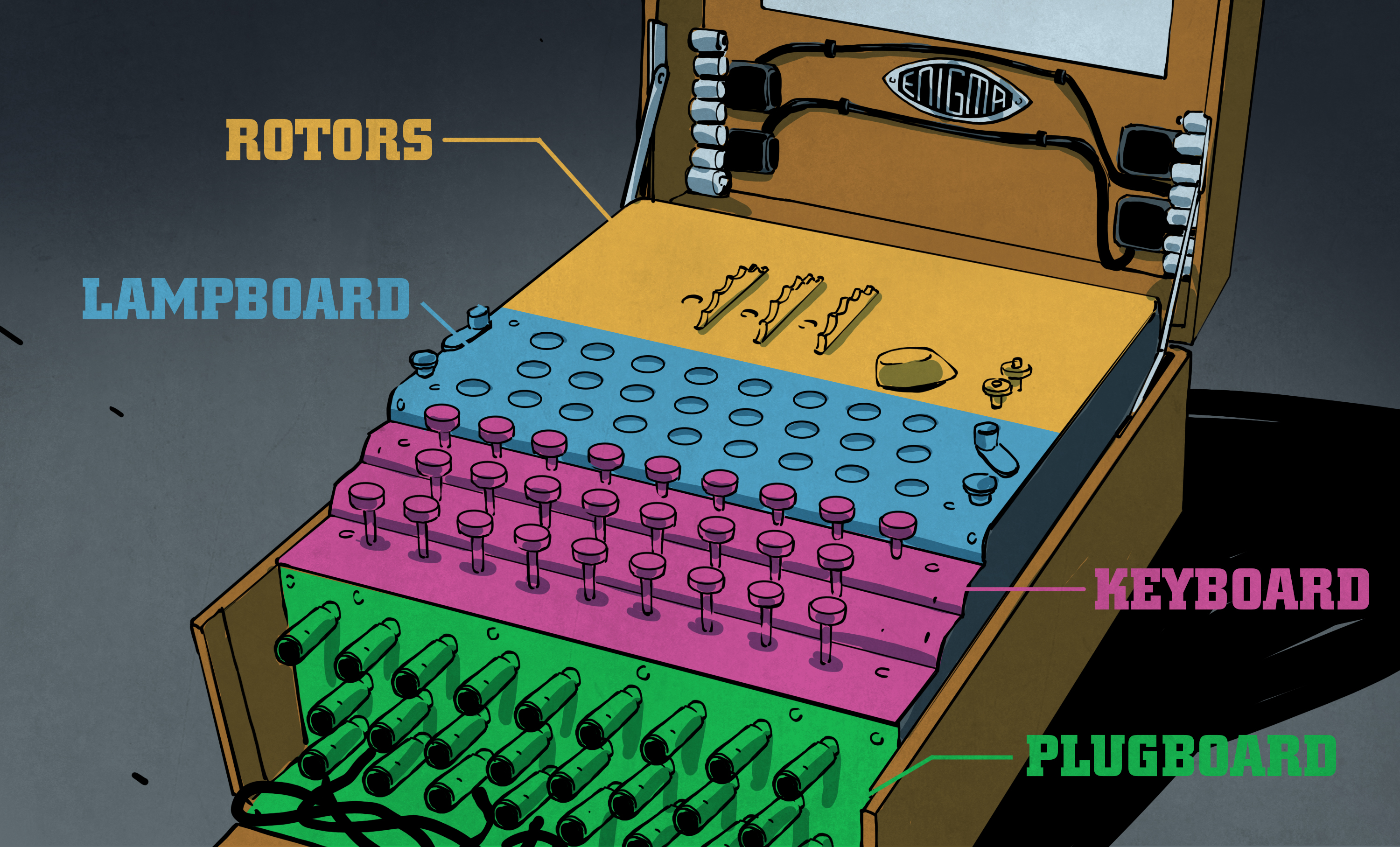
At around the same time, the English mathematician Alan Turing was working on a means to crack the German Enigma Code. In 1950, Turing published his paper “Computing Machinery and Intelligence” where he described how to create intelligent machines and how to test their intelligence (Haenlan, Kaplan 7). Turing is widely considered to be the founding father of computer science, and he created much of the computing theory that CS undergraduate students today study as a part of standard curricula. He created the Turing test, a means by which to determine if artificial intelligence is sufficiently “human-like”.
The term “artificial intelligence” was then coined in 1956, when Marvin Minsky and John McCarthy hosted the approximately eight-week-long Dartmouth Summer Research Project on Artificial Intelligence (DSRPAI) at Dartmouth College in New Hampshire (Haenlan, Kaplan 7). Among the attendees of this workshop were Nathaniel Rochester, who later designed the first commercial scientific computer, and the mathematician Claude Shannon who founded information theory.
For two decades after the Dartmouth conference, the field of AI saw a lot of success. Between 1964 to 1966, the program ELIZA was created. It was a natural language processing tool capable of simulating a conversation with a human user (a “chatbot”). Notably, ELIZA was able to pass the Turing test.
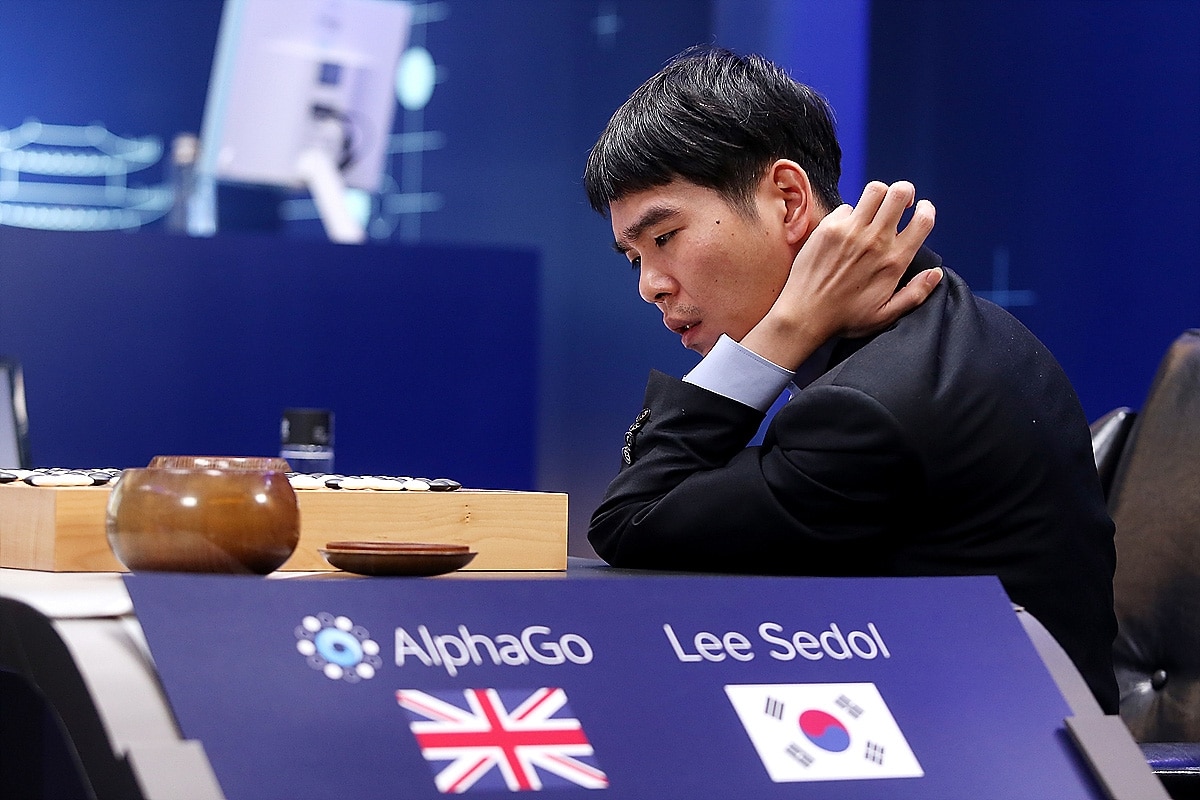
In the following decades, AI continued to develop, with advancements like IBM’s Deep Blue chess playing program which was able to beat the world champion Garry Kasparov in 1997, and Google’s Go-playing program AlphaGo which beat the world champion Lee Sedol in 2016.


Comments
Post a Comment